What Korean Viewers Really Think About Netflix’s K-POP Demon Hunters
The hottest content on Netflix lately has to be ‘K-POP Demon Hunters’. To be honest, when most Koreans first encountered this work, their reaction was a bit bewildering: “A ‘Hallyu’ animation invested by an American company and produced by a Japanese company…? What the…?” But Korean viewers could immediately recognize how much effort the production team put into this work and that the level of detail in this piece is top-notch.
In this K-POP Demon Hunters review, I want to explain the hidden Korean cultural details from a Korean perspective. If you’re planning a trip to Korea or have been interested in Korean content, this should be quite an entertaining read.

Korean Soul Food ‘Gukbap’ in K-POP Demon Hunters: Cultural Accuracy Explained
Just as Americans have ‘mac and cheese’, Japanese have ‘ramen’, and Italians have ‘pasta’, Koreans have ‘gukbap’ as their soul food.

For foreigners familiar with K-dramas or K-movies, you might think “Isn’t that a detail you can see anywhere?” But the real detail in this scene is Mira’s authentic Korean eating posture and the napkin placement.

Why Koreans Sit This Way: Traditional Floor-Sitting Culture
Korea is accustomed to floor-sitting lifestyle. These days, more people properly eat at dining tables, but when living alone or with friends, quite a few people still set up a table on the floor and sit down to eat. If you ask why, well, maybe because we’ve been doing the sitting style called “yangban-dari” (cross-legged) since childhood, some people find chairs uncomfortable. It’s not really a great habit, but even I sit in a kind of crouched position on chairs. Mira probably has that kind of style too, eating with her feet up on the chair.

Korean Dining Etiquette: The Napkin Detail Explained
There are two reasons for laying a napkin under utensils in Korean culture. First is when eating at a restaurant, worried that the table might not be clean (sometimes when you go to old Korean local restaurants, tables can be sticky). Second is actually when the table is too clean and you don’t want to get anything on it. It’s a habit of some Koreans that developed because we don’t use chopsticks by dipping them somewhere or holding them continuously while eating – we only use Korean chopsticks when eating the side dishes we want, so we usually put them down on the table. (Not everyone eats with napkins laid out, but if a foreigner did this, it would definitely be a bit surprising and interesting) However, napkins contain carcinogenic components that aren’t good for the body, so it’s not a recommended habit these days.
Korean Urban Life: Illegal Parking Culture in K-POP Demon Hunters


Korea has more cars than parking facilities. This causes many Korean urban parking problems, and there are often alleyways marked with ‘no parking’ signs. During the day, these alleys sometimes have illegal parking enforcement, and people don’t park there because it causes damage to the shops right in front, but after a certain time, the story changes. During nighttime when there’s no enforcement and no people around, people just park there. The reason is simple – there’s nowhere else to put their cars in Korean cities. As shown in the photo above, depending on the situation and location, many people ignore the signs and park even during the day.
Traditional Korean Art References in K-POP Demon Hunters
Jakho-do (작호도): Tiger and Magpie Art Tradition


at Hoam Museum of Art
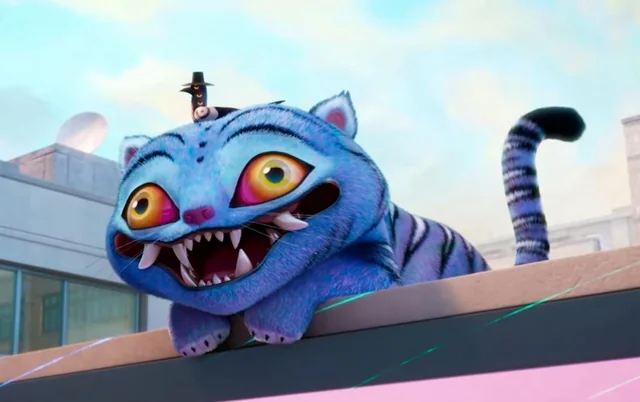
Duffy and Mr. Seo, the biggest scene stealers in this work, were inspired by traditional Korean art. When I first saw them, I thought ‘A tiger and a magpie? I’ve seen this somewhere…’ and sure enough, they were drawn based on a genre in Korean art called ‘jakho-do’ (or ‘ho-jak-do’). Jakho-do isn’t referring to a specific artwork but rather a genre that depicts tigers and magpies, so you can encounter various versions in different Korean museums. Representative examples can be seen at the National Museum of Korea in Seoul or the Hoam Museum of Art in Yongin, Gyeonggi Province.
Il-wol-obong-do (일월오봉도): Joseon Dynasty Royal Art


Also, the background that appeared in the idol awards ceremony scene is another Korean artwork. This piece called ‘Il-wol-obong-do’ depicts “the sun, moon, and five peaks”. It’s confirmed to have been produced only in Joseon Dynasty, not found in Japan or China, and is evaluated as a painting that reflects Joseon’s unique culture and ideology. You can see it at the National Palace Museum located in Jongno, Seoul.
Korean Tourist Attractions Featured in K-POP Demon Hunters
As someone living in Seoul, there were several scenes where I immediately reacted “That place!” Those were;
Naksan Park Seoul


Bukchon Hanok Village


COEX Artium in Samseong-dong


Namsan Tower


Conclusion: Why K-POP Demon Hunters Gets Korean Culture Right
K-POP Demon Hunters demonstrates exceptional attention to authentic Korean cultural details that resonate with Korean viewers. From traditional dining habits to urban parking culture, from classical art references to iconic Seoul landmarks, the series showcases a deep understanding of both modern Korean lifestyle and traditional Korean culture.
For international viewers interested in Korean culture or planning to visit Korea, these details offer genuine insights into daily Korean life beyond the typical K-drama or K-pop representations.