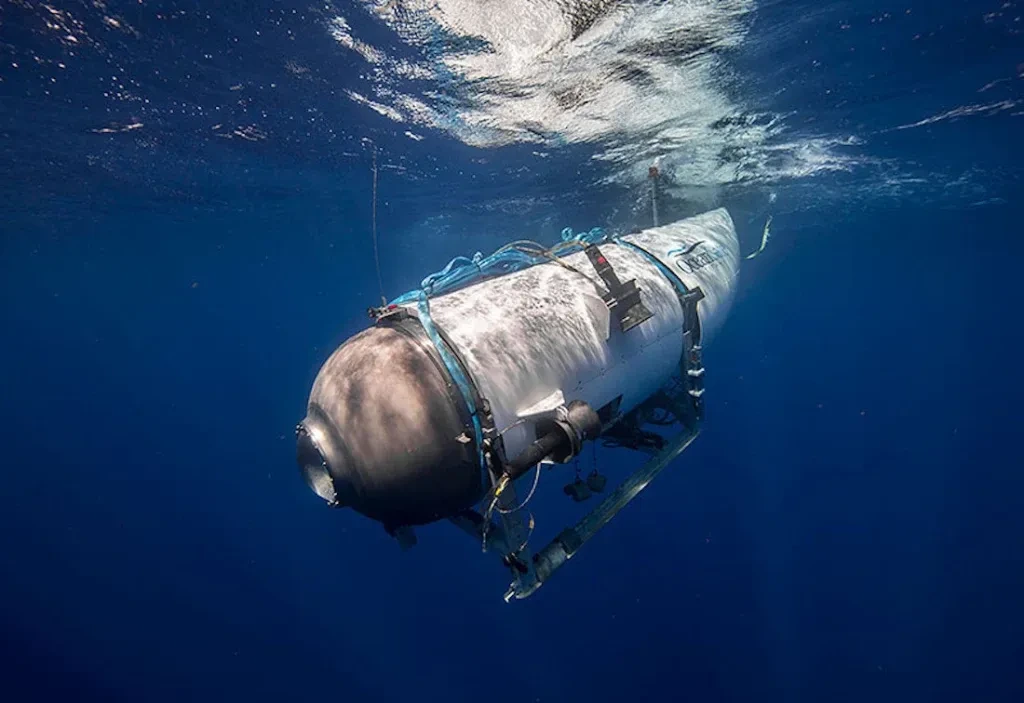
Netflix recently released a compelling documentary that has captured worldwide attention. The film, titled “Titan: The OceanGate Disaster,” explores one of the most tragic maritime incidents in recent history, offering viewers an in-depth look at the events that led to the catastrophic implosion of the Titan submersible.
The Power of Mystery: Coca-Cola, God, and the Titanic

What are the three most recognizable English words globally?
Coca-Cola, God, and Titanic.
OceanGate was founded with the ambitious goal of making the Titanic wreck accessible to paying customers. These three words share a fascinating commonality: they all represent the unknown.
Coca-Cola’s secret recipe remains officially undisclosed, God requires no explanation for believers, and the Titanic’s wreckage lies hidden in the ocean’s depths. This element of mystery creates an irresistible pull on human curiosity and fascination. The unknown has an inherent power to captivate our imagination and drive our desires.
Commercializing the Unknown: Selling the “Impossible Experience”
OceanGate’s Titanic expedition came with a staggering price tag of $250,000 per passenger (approximately 300-400 million Korean won). This wasn’t simply a cost-based pricing model—it was clearly positioned beyond the reach of ordinary individuals. The company had created a price point that transformed an “impossible experience” into something money could buy, specifically targeting ultra-wealthy individuals.
The billionaires who paid this extraordinary sum weren’t merely purchasing a sightseeing trip to the Titanic wreck. They were buying something far more valuable: an exclusive story that only a select few in the world could tell—”I saw the Titanic with my own eyes.”

However, the Netflix documentary reveals that this was clearly a dangerous undertaking from the start. Stockton Rush, OceanGate’s CEO, became trapped in his own vision and ignored numerous warning signs from the submersible, including the chilling sounds of carbon fiber cracking that are featured prominently in the documentary. Would passengers have boarded if they had heard these ominous sounds beforehand? Unlikely.
The passengers likely viewed the extensive liability waivers they signed as routine legal protection, similar to surgical consent forms at hospitals. They probably understood the risk as merely that of an “extremely dangerous sport.” Ironically, this very danger enhanced the product’s value proposition. If Titanic tourism had been a safe, accessible experience for everyone, it would never have commanded a $250,000 price tag.
This reflects a key trend in modern business: dopamine-driven consumption. Safety eliminates thrill, and without thrill, there’s no excitement. Consumers consistently choose the latter. This preference extends far beyond the wealthy passengers aboard the Titan.
Innovation vs. Recklessness: When Failure Becomes Rebellion

“If we fail, it’s rebellion; if we succeed, it’s revolution!”
Chun Doo-gwang, <12.12: The Day>
Stockton Rush appeared to deeply admire Elon Musk and positioned himself as a disruptive innovator. He reportedly viewed traditional submersible safety regulations as “conservative obstacles that hinder innovation.” Rush wanted to be seen as a revolutionary challenging the established order. In a 2019 interview, he stated that the commercial submarine industry hadn’t experienced a single fatality in over 35 years due to excessive regulation, making it “ridiculously safe” at the expense of innovation and growth.
However, this mindset isn’t unique to OceanGate. “Innovation” has become a universal corporate slogan, and in our rapidly changing world, “regulation” is often dismissed as outdated and growth-inhibiting.

The documentary emphasizes how marine technology and submersible experts repeatedly warned Rush about safety concerns. Former OceanGate employees raised multiple safety issues, only to be terminated for their efforts. Rush seemingly interpreted these warnings as resistance from established interests or academic theorizing. He likely believed himself to be a visionary genius like Elon Musk or Jeff Bezos, “ahead of his time.”
Expert opinions tend to be complex, technical, and “boring.” Rush’s vision, by contrast, was simple: “We will be among the first humans to see the Titanic wreck.” People generally prefer simple dreams over complex truths. This pattern appears in politics, business, and daily life. We often trust charismatic speakers more than genuinely skilled professionals. What constitutes true innovation?
Human Psychology When Facing the Unknown

The passengers certainly knew the risks involved. MrBeast, with his 400 million subscribers, was reportedly invited to join a Titan expedition but declined after his colleague Chandler advised against it. The liability documents signed by passengers contained multiple references to “death.” So why did they still board?
Several cognitive biases contributed to this decision:
Normalcy Bias, Authority Dependence, and Sunk Cost Fallacy
Among various cognitive biases, normalcy bias is particularly dangerous. It’s the “it won’t happen to me” mentality that proves fatal. Passengers likely thought, “It’ll be fine,” “Nothing will go wrong this time,” or “Surely not.” Additionally, while passengers lacked submersible knowledge, they trusted Rush as the CEO of a submersible company, relying on his apparent authority and previous achievements. Finally, having already paid substantial amounts, they were reluctant to abandon their investment of money and time.
The core lesson from the OceanGate disaster is the critical need to distinguish between “authority” and “expertise.” Rush possessed authority but was an aerospace expert, not a submersible specialist. People failed to recognize this distinction. This type of decision-making challenge occurs constantly in our daily lives. Those who present appealing messages to us typically possess “authority” rather than genuine “expertise.”
While the Titan accident represents an extreme case, similar situations occur regularly in everyday life. False advertising, overconfident stock and cryptocurrency “experts,” innovative technologies and products claiming revolutionary methods—they all share the common trait of commercializing the “unknown” while dismissing traditional expert warnings as “outdated conservative resistance.”
What Defines a True Innovator?
Throughout human history, all greatness has emerged from someone’s seemingly foolish and dangerous challenges. Columbus, the Wright Brothers, Steve Jobs, Elon Musk—all were initially dismissed as “crazy eccentrics.” Yet they succeeded while OceanGate and Stockton Rush failed. What made the difference?
I believe true innovators possess these characteristics:
- Acknowledge failures and make corrections
- Listen to expert advice
- Respect safety measures
- Never carelessly endanger others’ lives
Genuine adventurers, explorers, and risk-takers are bold yet simultaneously cautious. They respect the unknown. They acknowledge potential dangers, accept the possibility of failure, and understand that their choices may lead to adverse consequences. In contrast, false innovators view the unknown merely as something to “conquer.”
Conclusion: Lessons from the Deep
While OceanGate and the Titan have sunk beneath the waves, their lessons will continue to resonate. The company’s reckless dream of viewing tragic wreckage ironically ended in a tragedy remarkably similar to that of the Titanic itself.
The Titan OceanGate disaster serves as a stark reminder that true innovation requires balancing vision with responsibility, ambition with expertise, and dreams with reality. As we navigate our own unknown territories—whether in business, technology, or personal endeavors—we must remember to respect both the allure and the dangers of the unexplored.